Transform Your Teaching:

 Boost Your Language Skills and Advance Your Career with Our Expert-Led Courses!

Learn more

Teaching Collocations: the Lexical Approach in Practice

Course Overview:

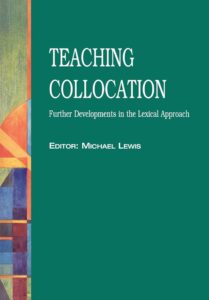
Deepen your understanding of the Lexical Approach and translate it into meaningful classroom work with Teaching Collocation: Further Developments in the Lexical Approach. This eleven-week course, led by Sérgio Pantoja and Bruna Passos, explores how collocations reveal the way language really works and how this understanding can impact both learning and teaching.

This book takes a practical approach, bringing together linguists and teachers who discuss key concepts of the Lexical Approach and how they can be turned into real classroom practices. Through their accounts, we see why this way of looking at language matters and how it makes teaching and learning more effective. The contributors also reflect on how adopting a lexical perspective has enabled them to overcome familiar challenges, such as the intermediate plateau, by focusing on real language use and awareness rather than isolated grammar or vocabulary study.

This course is designed for teachers who are interested in the Lexical Approach and want to gain clearer insight into its benefits and strategies that can be adopted. This reading builds a bridge from theory to real classroom practice, helping you see language in new ways and support your learners more effectively.

Core text for this course


About the book:

This volume builds on The Lexical Approach and focuses on collocation as a central element of lexical teaching. Bringing together contributions from leading practitioners and researchers, it bridges theory and practice, offering both a coherent conceptual framework and practical insights into day-to-day teaching.

The book challenges traditional grammar-first syllabuses, highlights the importance of lexical patterning for fluency and accuracy, and provides practical guidance on developing noticing, autonomy, and principled language exploration in the classroom.

Participants are expected to have a copy of the book and complete one chapter per week in advance of each session.


How long is the course?​

This is an 11-hour course

From February, 2026 to April, 2026 (11 live sessions – 1 hour per week)

Live session dates

Wednesday evenings from 19.00 to 20.00 (Brasilia time)

  • February 4,11, 25
  • March 4, 11, 18, 25
  • April 1, 8, 15, 22

Course program

Cancellation and Refund Policy

  • Enrollment Confirmation:

    • Your enrollment is confirmed once we receive your initial payment.
  • Refunds Before the Course Starts:

    • Cancellations submitted in writing before the course starts qualify for a full refund of any installments paid.
  • No Refunds After 7 Days:

    • No refunds will be issued for cancellations made more than 7 days after the course has begun.

Important Information

  • Group Size: 6–12 participants per group.

  • Google Classroom: Requires a Gmail account.

  • Session Recordings: Lessons are recorded and available for 10 days.

Course Fees

5 installments of R$ 154,80 via boleto bancário or credit card (December, 2025 to April, 2026)

With over two decades of experience in the ELT field, Sergio Pantoja has worked as a teacher, teacher trainer, speaking and writing examiner. He holds, among others, a degree in Languages, a postgraduate degree in English Language Teaching and Translation, a TESOL Certificate from the University of Oregon, USA, the C2 Proficiency certificate (CPE), and the Delta. His Delta Module 3 Specialism focused on LDT (Language Development for Teachers). Sérgio is the author of three books.

Bruna Passos has over 13 years of experience in ELT, with a background that includes ESP, EAP, course design, and coursebook and materials writing. She holds a degree in Languages and a Master’s in Linguistics, along with the C2 Proficiency certificate (CPE) and other professional qualifications. Bruna has designed courses and resources for diverse learner needs, with a particular focus on supporting advanced learners in becoming more resourceful, refining their skills, and achieving the level of proficiency they aspire to.